

The Remnant
The field
atlas.
In an increasingly secular Denmark, a small remnant of Christians strives to keep faith at the center of family, community, and daily life.
Watch the first sceneHow did Christianity go from being at the center of Danish and northern European life, to being relegated to a small remnant of committed believers? Could the underlying answers to this question be tied to the lives of a German composer and Danish philosopher, both born in 1813?
The Remnant: The Last Christians of Denmark is an independent documentary exploring the lives, hopes, and challenges of traditional Christian families in one of the world’s most secular nations.
Through intimate interviews, scenes of rural and city life, and a meta-narrative tracing the connection to Kierkegaard and Wagner, I explore Denmark’s spiritual and cultural path and the need for both individual devotion and collective grand narratives in western life today.
The Remnant
The last Christians
of Denmark.
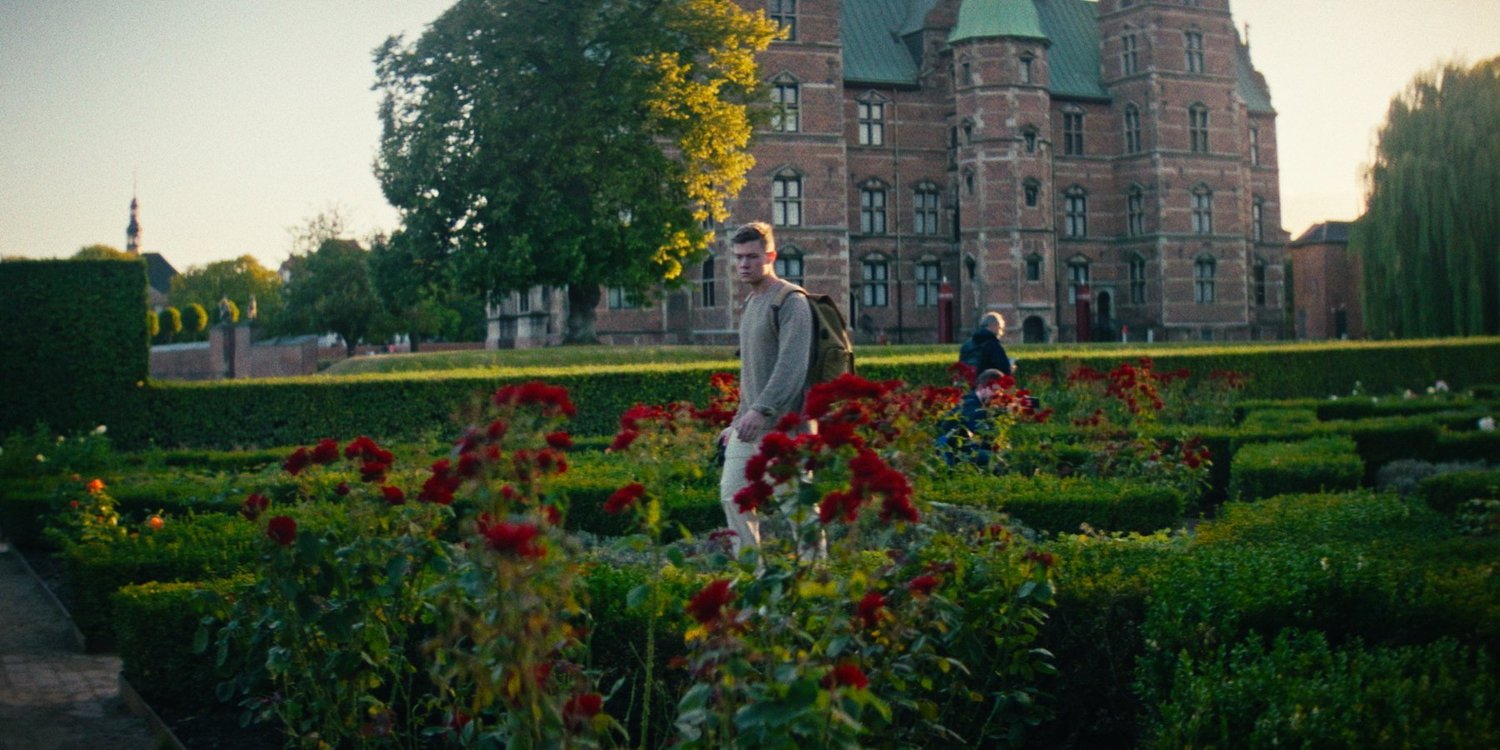
I travel to Denmark to meet families, —a farmer and theologian attempting to create intentional Christian Danish community and hosting a local harvest festival, a couple newly arrived from Iceland in search of freedom to raise their family, and a mathematician in a classic Danish townhome, who live with purpose amidst a society which has become cold to the Christian faith.
Copenhagen
A world made
safe.
150 years ago, the young philosopher Søren Kierkegaard walked through the prosperous streets of Copenhagen and saw a spiritual disaster. He realized that the new, rational systems of European life were stripping away the human capacity for passion and risk.
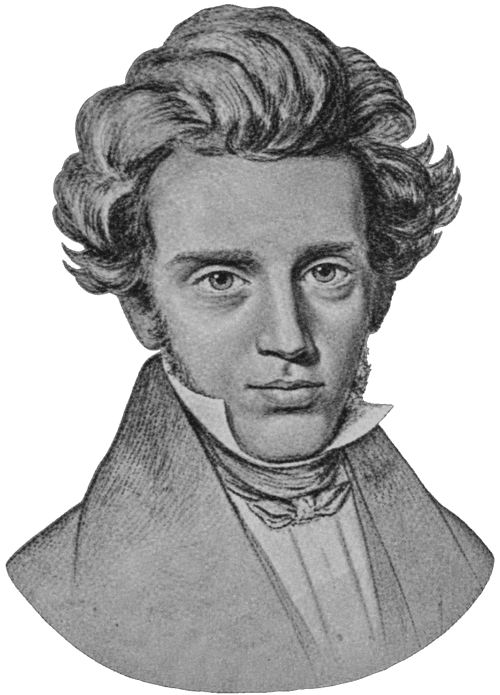 Søren KierkegaardFaith must be lived
Søren Kierkegaard (1813–1855) was a Copenhagen writer whose Either/Or and Fear and Trembling explored choice and faith. His later polemics attacked the comfortable Christianity of Denmark’s state church.
In the filmIn The Remnant, he represents personal Christian conviction and action: the demand to live a faith that a well-managed society can reduce to a label.
Sources & image credit
Image credit
Portrait published by the Royal Library of Denmark, reproduced in 1923. Public domain. Background removed. Image source
Born in 1813
Collective
re-enchantment.
Kierkegaard focused on personal religious conviction and the individual’s story; Wagner focused on the collective, shared spiritual and cultural story. That contrast is why Wagner is key to the film.
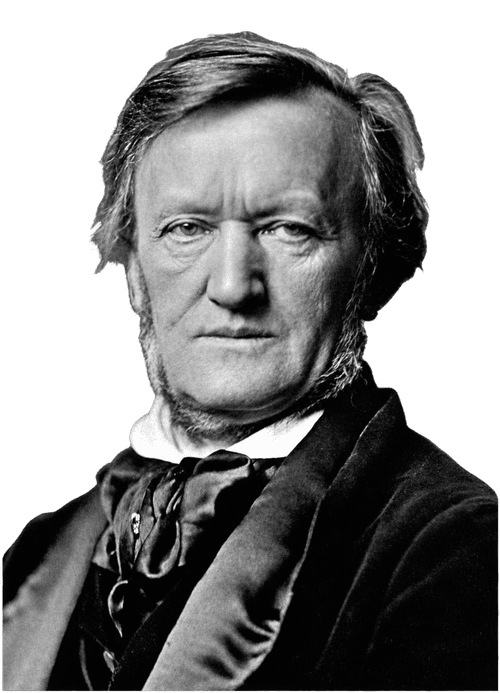 Richard WagnerA total work of art
Richard Wagner (1813–1883) was a German composer shaped by revolution and exile. In the Ring cycle, he joined myth, music, and drama in an ambitious communal art experience.
In the filmWagner is key to The Remnant because, while Kierkegaard focused on personal religious conviction and the individual’s story, Wagner focused on the collective, shared spiritual and cultural story. The film follows both before tracing managerialism’s displacement of them.
Sources & image credit
Image credit
Portrait: Franz Hanfstaengl, via Wikimedia Commons. Public domain. Background removed. Image source
At home in Denmark
“The priests do not
believe in God.”
For Mikkel Simonsen, speaking with me after a meal of Smørrebrød in his Danish home, this startling statement is simply a bureaucratic fact.
Inside the study
Kierkegaard and
the Space Wolves.
A mathematician does cancer research from his home in Lolland. His office tour takes a turn at the bookshelf, where WWI history volumes and Warhammer share shelf space.
“So this is kind of where the magic happens.”
From Iceland to Denmark
Why they
left Iceland.
They decided that to save their family, they couldn't fight the system and hope to win. They had to leave it entirely to protect their sons.
From Iceland to Denmark
A move for
community.
A couple explain why they left Iceland to find a Christian community in Denmark. A question about their Danish roots gets them laughing about genealogy.
Faith and ancestry
The Vikings
became Christians, too.
An Icelandic woman asks why ‘Viking culture’ is presented as exclusively pagan. For her, the Vikings’ adoption of Christianity belongs in the grand story, too. She sees the warrior and adventurer spirit of her Norse ancestors and her deeply held Christianity as complementary.
Lolland
“A lot of
freedom.”
"We don't have a lot of money... but we have a lot of freedom."
Filming on the farm
What about
their friends?
One father describes the question people ask about homeschooling. His answer moves from what visitors notice when they meet the children to friends and Scouts.
Mikkel’s son catching a wild mouse
Lolland
A few families
close by.
A father explains what he hoped to find by moving to Lolland. He pictures families close enough to lend each other a hand and children who grow up knowing one another.
“I really hope that we can build some community here.”